Splitters Farm – Camping and Glamping

205 Blairs Road, Sharon, Queensland 4670

Splitters Farm is a unique rural camping and farm stay experience is a fantastic location to use as a base to explore the Bundaberg region and Southern Great Barrier Reef.

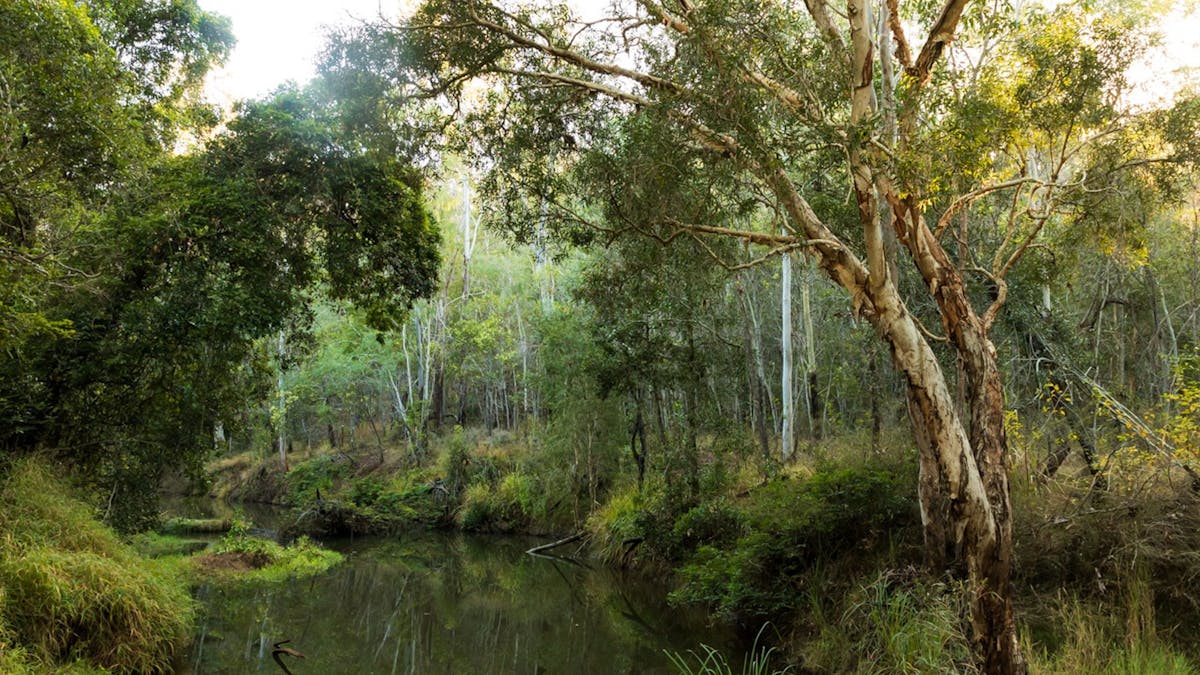
160-acre tranquil bush retreat that is home to native Australian wildlife including platypus and over 150 species of birdlife. Featuring self-contained accommodation in two-bedroom deluxe safari tents with private balconies and fire pit areas overlooking the natural freshwater oasis that is Splitters Creek.

Walk around early mornings with a hot coffee feeding the rescue animals or why not explore this working cattle farm and its bushland surrounds on foot.

Located 11 kilometres north of Bundaberg. This animal sanctuary and unique rural farm stay offers 8 two-bedroom deluxe safari tents with a large viewing deck overlooking Splitters Creek. Private fire pit areas allow guests to star gaze into the night by the campfire whilst listening to the sounds of the farm.

Tours

Facilities

  • Barbeque
  • Camp Kitchen
  • Carpark
  • Communal Kitchen
  • Communal Refrigerator
  • Communal Shower
  • Conference/Function Facilities
  • Drive through sites available
  • Dump point
  • Kiosk
  • Laundry
  • Open Fireplace
  • Outdoor Dining Area
  • Outdoor Furniture
  • Parents Room
  • Playground
  • Secure Parking
  • Tour Desk

Actively welcomes people with access needs.

  • Accept the Companion Card
  • Advise tour guides of the access needs of guests at the time of booking (includes pick up and drop off requirements)
  • Ask all visitors if there are any specific needs to be met
  • Have accessibility information and photos, including of a bathroom, room and/or floor plan on your website (can be emailed on request)
  • Offer a range of contact methods for receiving complaints
  • Offer multiple options for booking - web, email, phone
  • Provide assistance with booking arrangements (includes providing clear itineraries with written instructions on what to do at various destinations)
  • Train your staff in disability awareness
  • Website meets <a href="https://www.w3.org/WAI/standards-guidelines/wcag/" target="_blank">WCAG 2.0</a> accessibility standards

Caters for people who are blind or have vision loss.

  • Have Braille and tactile signage on all information and paths of travel
  • Have Exit signs which are visible at a ground level (high level signs are difficult to see in a fire)
  • Have an appropriate area for toileting an assistance dog
  • Have handrails on all your stairways
  • Provide information in large print
  • Train your staff in customer service for people with vision loss (training would incorporate way finding and communicating with people with vision loss)
  • Use easy read fonts in your signage and communication materials (Helvetica and Arial)

Caters for people who use a wheelchair.

  • Allow space around toilet for a wheelchair (A space of at least 900mm width beside the toilet pan and 1200mm clearance in front of the toilet pan is required)
  • Have a doorbell or intercom at an accessible height and display a contact number (accessible height is 900mm-1100 mm)
  • Have a handheld shower hose (should be at least 1500mm long)
  • Have a lever handle on bathroom door
  • Have a lever handle on the door (easier to use)
  • Have a shower curtain (no door)
  • Have a wheelchair accessible bathroom (Entrance to bathroom must have step free greater than 5mm or a doorway threshold ramp not exceeding 1:8 for 450mm. Bathrooms dimensions must be no less than 2000mm X 2500mm. Have a hobless (step free) shower recess. Shower recess must have at least 1100 x 1100mm clear area for wheelchair access (no door). Have a slip resistant fold down seat or fixed seat in shower .Seat must be at least 900mm long.)
  • Have a wheelchair accessible toilet / shower and change room
  • Have accessible seating areas in theatrette
  • Have an accessible public toilet which is unlocked
  • Have at least one wheelchair accessible parking space with wheelchair accessible signage clearly displayed (International standards are 3200mm wide x 2500 mm high)
  • Have doorways which are easy to open and have lever handles (doorways 850mm or wider when open and not heavy)
  • Have enough space for a wheelchair to move around three sides of a double king sized bed (A pathway of 1200mm minimum width is required for wheelchair access)
  • Have grabrails in shower recess (can be removable and height adjustable)
  • Have step free access to restaurant, lounge and bar
  • Have step free access to room (Entrance to the room wheelchair accessible with step free greater than 5mm or has a doorway threshold ramp not exceeding 1:8 for 450mm length)
  • Have step free access to the conference or function room
  • Have step free outdoor pathways (includes picnic areas, barbecues and shelters)
  • Provide a choice of wheelchair accessible accommodation rooms (Guest may wish to know if you have a choice of wheelchair accessible rooms, such as single room / studio apartment / apartment / cottage / quality / views, etc. Wheelchairs require a 1600mm x 2200mm width area to turn around and require step free access.)
  • Provide grabrails provided adjacent to the toilet

Caters for people with allergies and intolerances.

  • Adhere to The Food Authority requirements for allergy management in food preparation
  • Have equipment to respond to anaphylactic shock such as epi–pens and defibrillator
  • Modify your cooking and cleaning practices to cater for people with food allergies or chemical intolerances (could include menus with meals free from: nuts, dairy, seafood, eggs, gluten etc)
  • Provide linen that is chemical and fragrance free (if requested)
  • Provide toiletries which are chemical and fragrance free (if requested)
  • Train your staff to respond to allergic reactions

Caters for people with high support needs who travel with a support person.

  • Have rooms which are interconnecting
  • Have twin beds available on request

Caters for people with sufficient mobility to climb a few steps but who would benefit from fixtures to aid balance. (This includes people using walking frames and mobility aids)

  • Have grab rails in the bathroom
  • Provide seating in common areas including reception area
  • Use floors/coverings which are slip resistant, firm and smooth
  • Use non-slip tiles in the bathroom or slip resistant matting

Welcomes and assists people who have challenges with learning, communication, understanding and behaviour. (includes people with autism, intellectual disability, Down syndrome, acquired brain injury (ABI), dyslexia and dementia)

  • A quiet space is available at the venue/ facility
  • Train your staff in communicating with people with learning or behavioural challenges
  • Use Plain English / easy read signage and information (includes menus and emergency information)