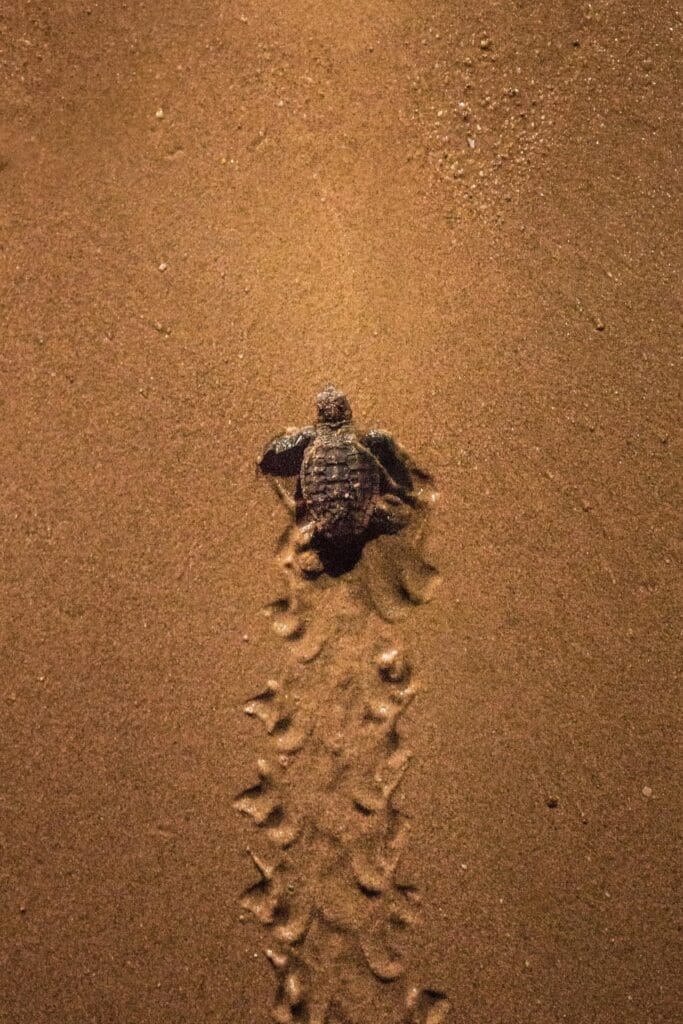
As the gateway to the Great Barrier Reef and home to the most significant loggerhead turtle nesting population in the South Pacific we pride ourselves on being a community that takes Great Care in protecting and conserving our natural experiences, especially our turtles, for future generations to come.
With Mon Repos Turtle Centre welcoming more than 30,000 visitors to our region each year, our industry has an important role to play in Taking Great Care for Turtles. From reducing artificial lighting and single-use plastics to helping visitors understand responsible turtle encounters, small changes to everyday business practices can make a meaningful difference.
Explore practical tips, resources and simple actions your business can take to help support turtle conservation.
What you’ll learn
- How artificial lighting can affect nesting turtles and hatchlings.
- Practical ways to reduce unnecessary lighting around your business.
- Steps to improve waste management and reduce single-use plastics.
- How to share responsible turtle tourism information with visitors.
- Where to access conservation resources and industry guidance.
1. Share responsible turtle tourism information with visitors
Team BT are always pumping out awe-inspiring content to influence visitors to Travel for Great.
Practical ways to get involved:
- Share official turtle conservation information through your business’s social and website channels.
- Display turtle awareness materials in visitor-facing areas.
- Download your Bundaberg Region Turtle Season A4 Poster.
- Include relevant conservation guidance in guest information and pre-arrival communications.
- Direct visitors to official information about turtle encounters at Mon Repos
- The official tour and booking operator for ranger-guided Mon Repos Turtle Encounter is Queensland Parks and Wildlife Services held at Mon Repos Turtle Centre
- Encourage guests to follow instructions from Queensland Parks and Wildlife Service and authorised guides.
Access turtle awareness resources
Help share the message by downloading our Where Great Care Begins social media tile.
You can also follow Visit Bundaberg on Facebook and explore our destination stories for relevant content to share with your audiences. When sharing our content be sure to tag @visitbundaberg and #visitbundaberg.
Bundaberg Regional Council have also developed a range of assets for residents, businesses, and visitors to discover how they can become ‘Turtle-y Aware’. Click here.
These resources have been proudly put together through working in partnership with Sea Turtle Alliance, Bundaberg Regional Council and Queensland Parks & Wildlife Services. A collective effort to provide Great Care for the turtles that call our shores home. You can also find official Mon Repos information and resources to help visitors prepare for their experience and understand appropriate behaviour around marine turtles.
2. Reduce unnecessary lighting at night
Artificial lighting can interfere with marine turtle nesting and hatching behaviour. Hatchlings rely on natural light cues to find their way towards the ocean, and artificial light can draw them away from the beach.
Businesses, particularly those near nesting beaches, can help reduce unnecessary light by:
- Encouraging staff and guests to minimise unnecessary lighting during turtle nesting and hatching season.
- Switching off indoor and outdoor lights when they’re not needed.
- Closing curtains and blinds at night to limit light escaping from buildings.
- Reviewing lighting around accommodation, outdoor dining areas and entrances.
Additional Industry Resource: Bundaberg Regional Council’s Reducing Urban Glow Guide for Business Premises.
3. Review your outdoor lighting
Turtles are particularly sensitive to light in the blue spectrum, so choosing warmer lighting can make a difference. The colour, brightness, direction and placement of artificial lighting can influence its impact on marine turtles.
If you’re installing or replacing outdoor lighting, consider:
- Choosing lower-intensity lighting that meets operational and safety requirements
- Using warmer-coloured lighting with reduced blue light.
- Directing lights downwards and away from nesting beaches.
- Installing shields to minimise light spill.
- Avoiding unnecessary illumination of buildings and surrounding vegetation visible from nesting areas.
Top tip: Look for lights with a lower colour temperature (2700–3000 K) and a warm yellow or amber glow.
Warm-coloured lighting alone doesn’t necessarily make a lighting installation suitable for areas near turtle nesting beaches. The overall lighting design and its potential impact should also be considered.
You can find more information about types of lighting in Bundaberg Regional Council’s Reducing Urban Glow Turtle Friendly Lighting Guide here.
4. Use dimmers, motion sensors or timers on outdoor lighting
Hatchlings find their way to the ocean by moving towards the natural light on the horizon. Artificial light can disorient them, drawing them away from the ocean and towards urban areas.
Outdoor lighting is sometimes left on longer than necessary. Timers, dimmers and motion sensors can help businesses manage when and how lighting is used, reducing unnecessary light to help keep the natural horizon visible.
Consider reviewing lighting across:
- Car parks and pathways.
- Outdoor dining areas.
- Accommodation balconies.
- Building entrances.
- Landscaping and decorative features.
For businesses operating near nesting beaches, lighting controls are one of several measures that can help minimise artificial light reaching coastal environments.
Top tip: Start by identifying outdoor lights that remain switched on overnight and reviewing whether they’re needed.
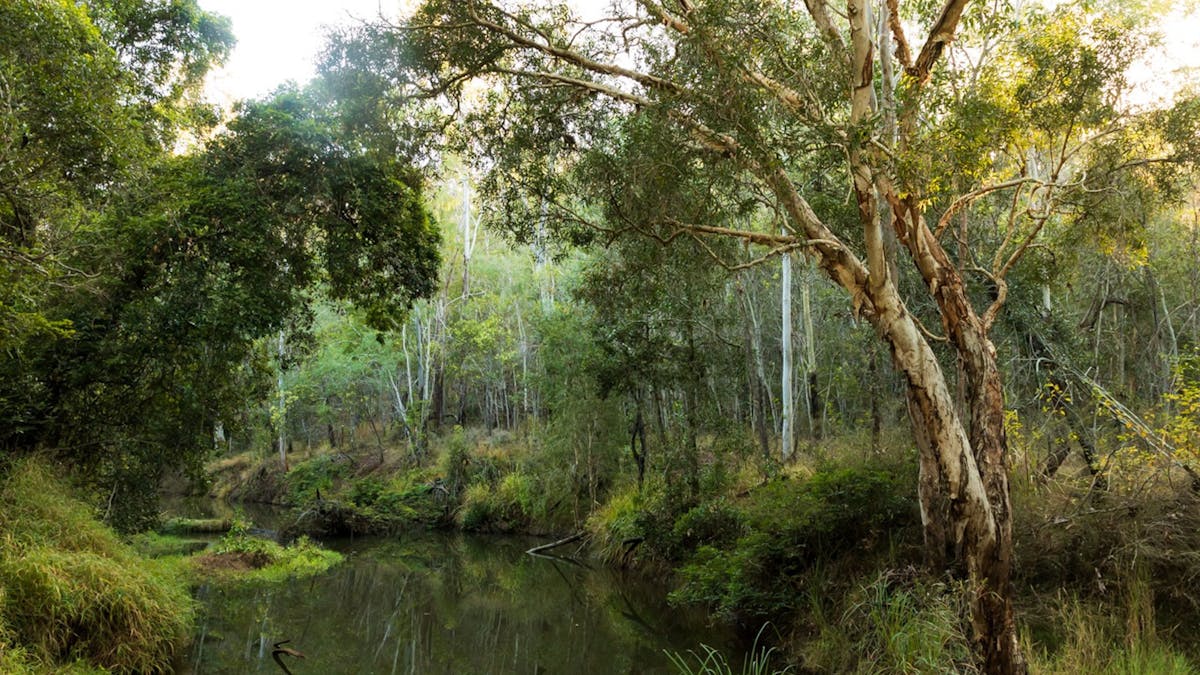
5. Recycle right and keep rubbish out of our waterways
Keeping rubbish out of our waterways is very important! According to Queensland’s Plastic Pollution Reduction Plan, if turtles ingest even just one piece of plastic, they have a 20% chance of mortality. Learn how to correctly dispose of waste here.
Businesses can help reduce the risk of litter entering waterways by:
- Encouraging staff and visitors to dispose of rubbish responsibly.
- Providing clearly labelled waste and recycling bins.
- Keeping outdoor bins covered and secured.
- Regularly checking outdoor areas for litter.
- Ensuring waste is stored appropriately before collection.
6. Reduce single-use plastic where possible
Consider swapping single-use items for reusable alternatives, offering refillable amenities and choosing recyclable or compostable packaging where possible.
Find more practical ways to reduce single-use plastics in the Queensland Government guide for businesses.
Hosting an event? You can also hire the #lessismore water bottle refill station. Find out more here.
Depending on your operations, here are a few additional considerations and tips to help reduce and improve waste management:
- Working with suppliers to identify opportunities to reduce unnecessary packaging.
- Replacing disposable items with reusable alternatives.
- Offering refillable guest amenities.
- Providing access to drinking water refill stations.
- Reviewing packaging used in takeaway food and beverage services.
7. The bigger picture
As the legends at Sea Turtle Alliance say ‘Together we can all make a difference’, so start taking steps today to contribute to a more sustainable future!
- Start by calculating your business’ carbon emissions with EarthCheck’s Carbon Emission Calculator
- Read through Bundaberg’s Carbon Footprint Baseline Report to see how the local Tourism Industry plays a part in the bigger picture; and
- Learn how to develop sustainable practices within your business.
Every action has a role to play
Protecting marine turtles requires ongoing conservation efforts, informed decisions and cooperation across government, industry, conservation organisations and the community.
For local businesses, practical steps such as reducing unnecessary lighting, managing waste and sharing accurate visitor information can help address some of the pressures affecting marine turtles and their habitats.
Start by reviewing your business practices and identifying where you can make a practical improvement.